TV Scrabble: What We Found in the Box
From a Half-Price Books find to a two-day editing marathon — here's everything that happened when we opened our copy of TV Scrabble.
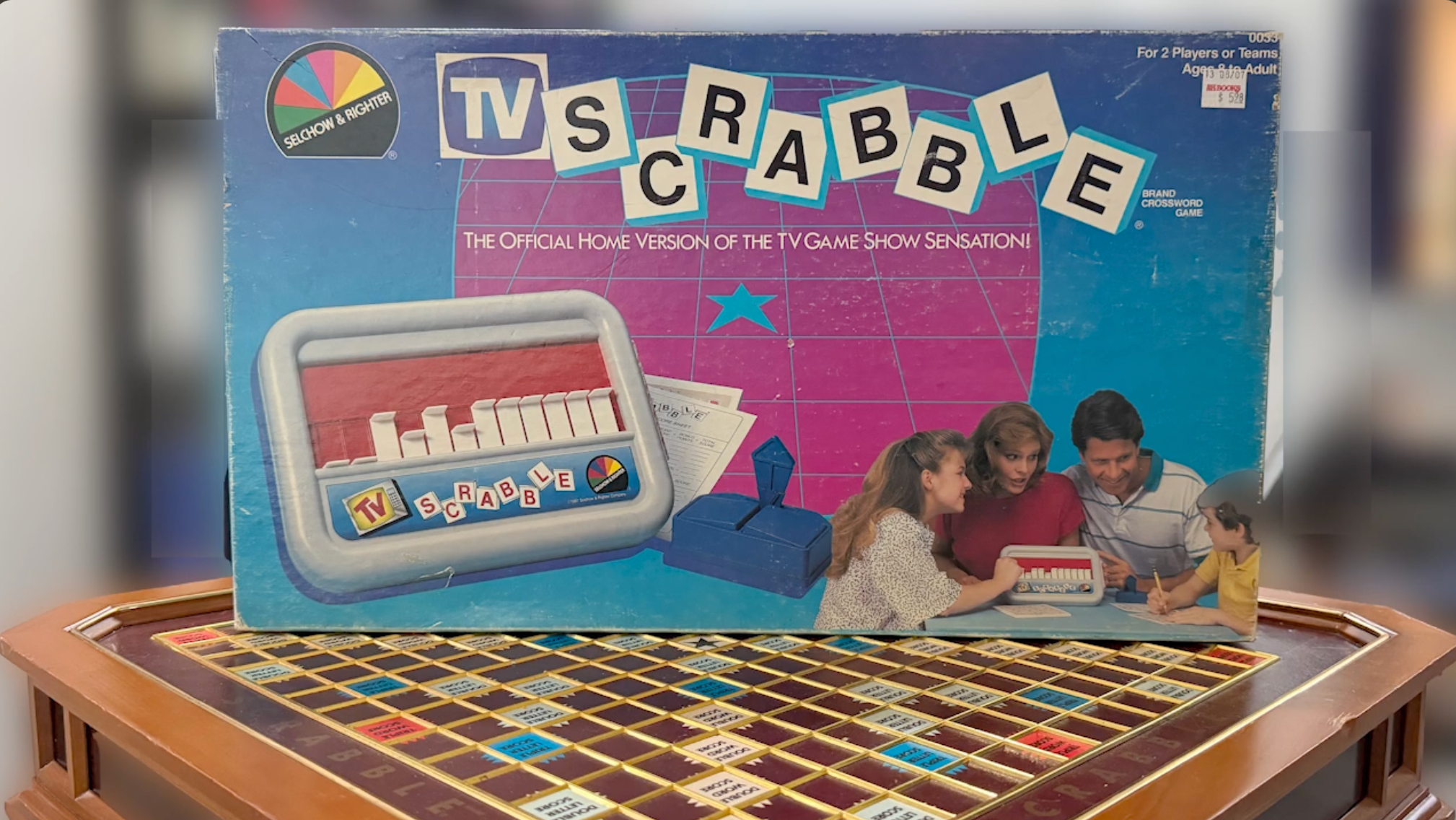
There's a particular kind of excitement that comes with finding a game show board game you've never seen in person before. You know the show. You've seen clips. You have a general sense of what the game should be. And then you're standing in front of it on a shelf somewhere, and you think — yeah, we have to do this one. That's exactly how TV Scrabble came into our collection.
How We Found It
I'll be honest: I wasn't actively hunting for TV Scrabble. We were shopping at a Half-Price Books in Austin, and there it was, sitting on a shelf like it had been waiting for me and only me to find it. The box was in solid shape and the price was right: $5.98. It came home with me that day.
We narrowly avoided disaster when Tyler and I lived in our first place, run by a shady landlord and a handyman who would later appear on Crime Stoppers for skipping bail - but that's beside the point. The point is, the place leaked like crazy whenever it rained, and over time we found our closet - where we kept all the games - was sodden with water and developing mold. A few of the games had some minor water damage, Scrabble included, but nothing was outwardly destroyed.
Opening the Box
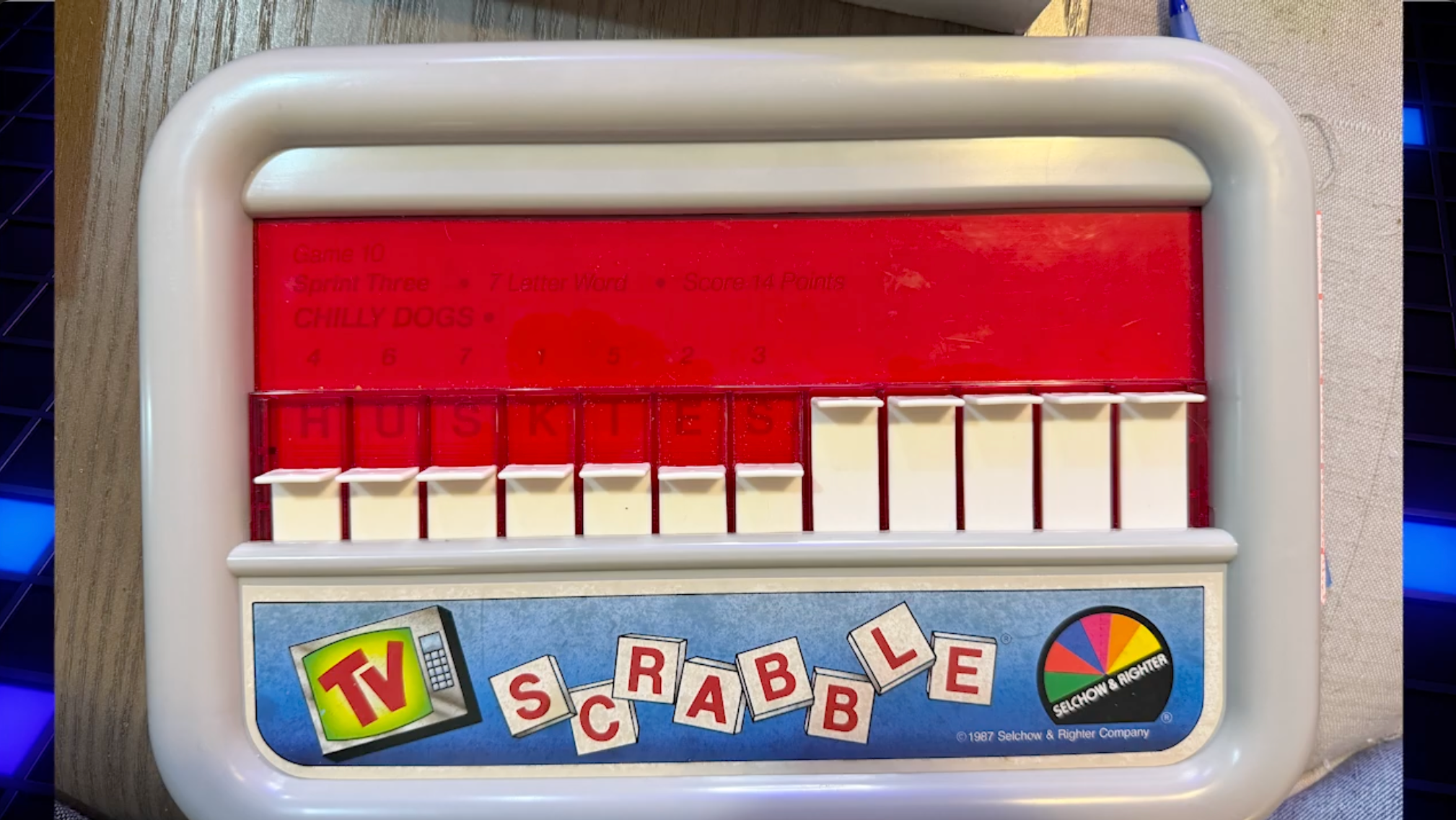
The first thing you notice with a game like this is there's a distinct lack of stuff inside. No tiles, no traditional game board. Just a stack of score pads, a pad of games, and the plastic console and blue plastic 'buzzer.' Whoever owned this before us took care of it, barely played it, and we appreciated that. And then we got to the console.
The Red Plastic Screen Problem
Here's something nobody warns you about when you're buying vintage game show board games: some of them were designed for a world that no longer exists. TV Scrabble uses a console with a red plastic screen — the kind you look through to reveal hidden letters, clues, and category information during gameplay. In 1984, under the warm incandescent lighting of a living room or a television studio, that screen worked exactly as intended. The red filter blocked certain colors and revealed others, creating a clean reveal effect. Under modern LED lighting, it's a different story. The contrast just isn't there the way it used to be. What should be a crisp, satisfying reveal becomes a squinting exercise. You can mostly make it out, but "mostly" isn't great when you're trying to play a game on camera and also explain what's happening to an audience who can't see what you're seeing. That's why, as you watch the episode, you'll note that we make some mistakes and mis-reads.
The other main issue, one that transcends the decades, is the pad of games. You have to fold the paper accordion-style and slide the folded paper into the console. And you have to fold it -exactly- right, otherwise, stuff that's meant to be concealed can show up above the sliding doors, and vice versa.
Two Days of Editing
Recording the episode went well. The game played smoothly, the moments were there, and we had what we needed. Then came the edit. TV Scrabble is a visually busy game. There's a lot happening on screen at any given moment — the board, the tiles, the reveals, the score, the players, and the sound and music effects.
Translating that into something watchable on video means making a lot of decisions about what to show, when to cut, and how to keep the energy of the game intact without losing the viewer in the details. The graphics and effects for this episode took close to two full days to finish after we wrapped recording. That's not a complaint — it's just the reality of what this show requires when the source material is complicated and you don't have the Chyron electronic graphics system built for this kinda of show to work with.
We want every episode to feel like you're watching something that was made with care, not just a couple of guys pointing a camera at a board game. That takes time. The Scrabble board itself required custom overlays so viewers could follow along with the letter placements. The letter reveals needed to be handled in a way that actually communicated what was happening, given the lighting challenges we'd already dealt with. By the time we exported the final cut, we'd probably looked at that red plastic screen more times than anyone has since the Reagan administration.
Worth It
Every episode teaches us something — about the game, about production, about what works on camera and what doesn't. TV Scrabble taught us about the limits of vintage hardware under modern conditions, and about how much work goes into making something look effortless. If you've seen the episode, you know how it turned out. If you haven't — go watch it. We think it holds up, even with the wonky volume fluctuations (totally my fault). And if you happen to own a copy of TV Scrabble yourself, try it under a lamp with an old incandescent bulb. You'll see exactly what we mean.
Explore Topics
Share this post
Written by
Chase
Content creator and writer sharing insights and stories.