Sale of the Century: Unsealing 40 Years of History
Our first-ever game unsealing, a precarious buzzer situation, $3,000 worth of carpeting, and the ongoing quest for better video quality.
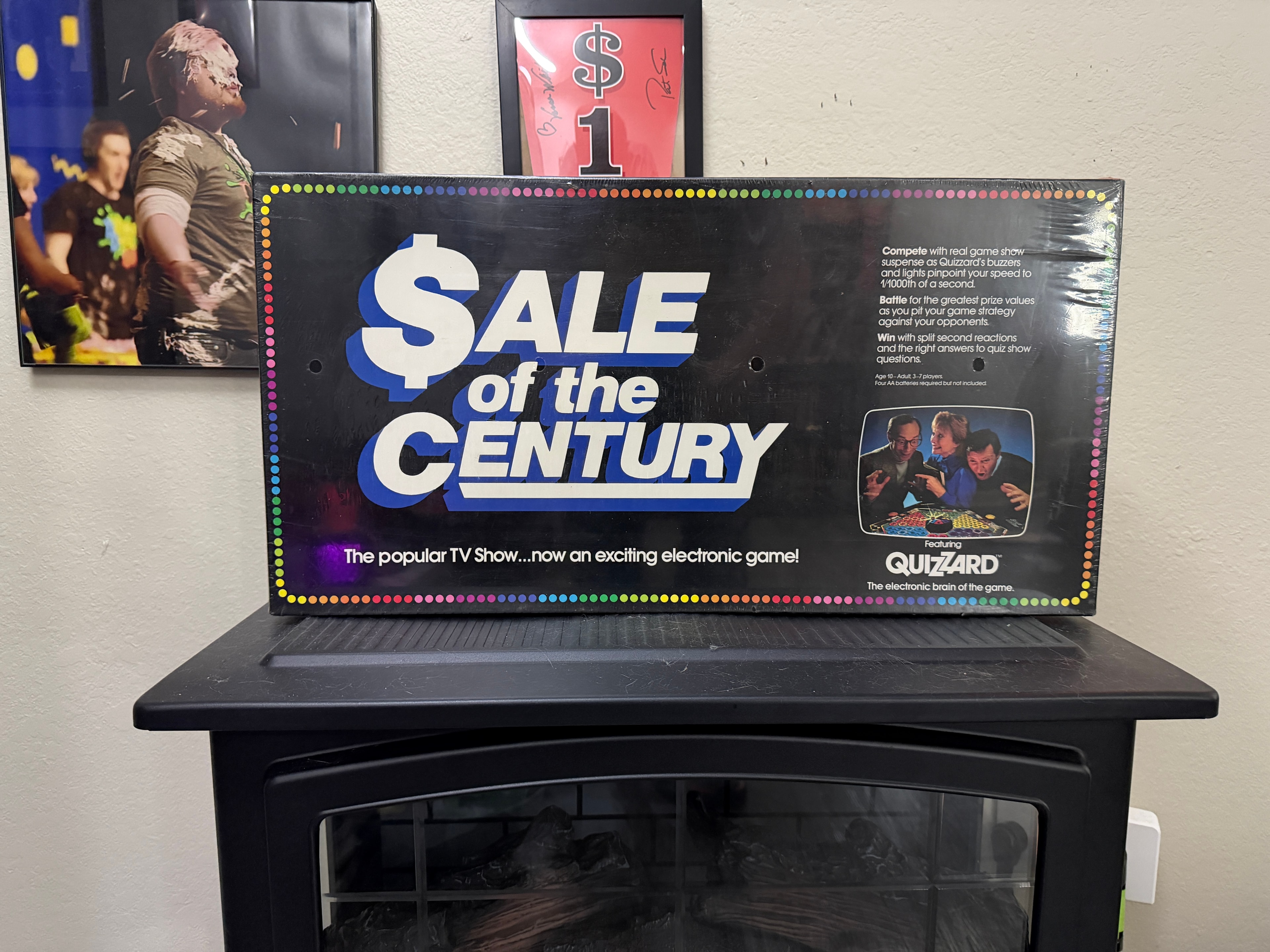
After the two-day editing marathon that was TV Scrabble, my intent was to make Sale of the Century an easier affair. That didn't end up being the case.
A First for the Show
For starters, this was our first game unsealing — taking the box out of its shrink wrap where it had been for over 40 years. Next, this was an actual board game, with lots of physical elements I wanted you all to see, so that required more thought as to logistics.
Tyler and I settled on two setups. The unsealing would take place with my iPhone up on a tripod that we could set at a bird's-eye shot so you could see everything on the table as we took it out. For gameplay, we'd utilize my MacBook's built-in camera and the Photo Booth app to record our two-shot, with the iPhone running again at my side in bird's-eye view for shots of the board as needed.
The Buzzer Situation
As you've seen in the video (hopefully you've watched it!), the electronic component of the game is a small web of buzzers connected by wires, and there's not much leeway in those wires to allow you to put them in any configuration except the color-coded pattern on the board. It also means those buzzers have to be put in their slots in a very specific direction or they won't stay. It took us awhile to figure that out.
Once we got the buzzers oriented the right way, we knew right away the next little hurdle was the board itself. It was no longer flat against the table, but supported by these six buzzers that were precariously slotted into place. When we tested the buzzers, we figured out that any jostling of the set would dislodge buzzers, unbalance the board, and cause a mess.
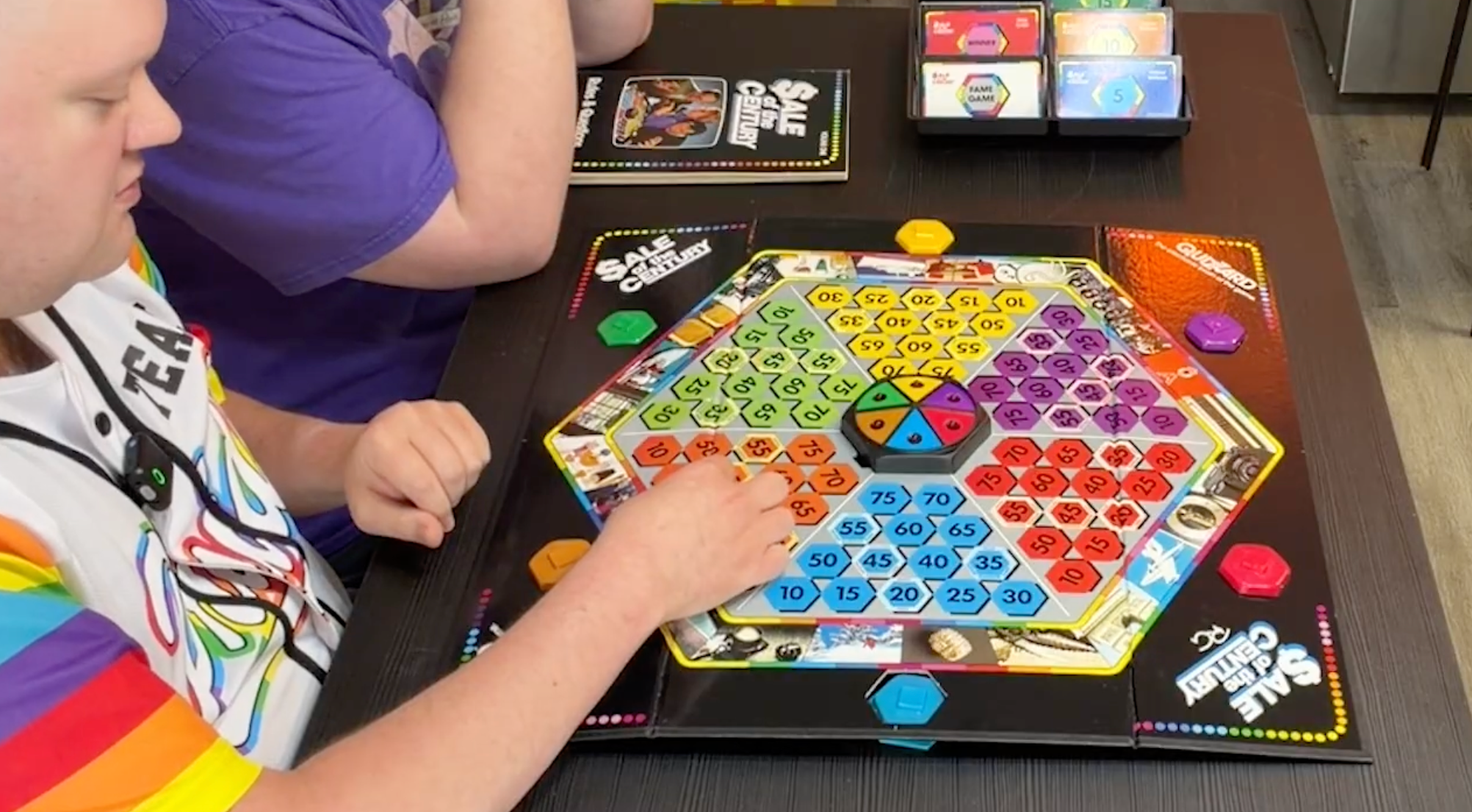
Imagine having a full crew of six players slamming their hands down to be the first to answer a question? There is no way you could keep the cardboard counters in place and maintain a smooth-running game.
Gameplay
Gameplay is fairly straightforward, with the exception of the Instant Bargain offers, which the host has to pay attention to where game pieces are on the board. It's very easy to lose track and to forget, "Oh, I'm supposed to do something at this point." Other than that, the question book supplied with the game does a good job of guiding the host through the process. The questions themselves are pretty challenging.
Since it was just Tyler and me taking turns running through a whole page of questions each, it meant editing between the two-shot and the overhead shot was fairly easy. What ended up being more time consuming was adding in the sound effects. There were chimes and bells for Instant Bargain and Fame Game segments, so I had to make sure he and I both mentioned on camera, "It's time for the Fame Game," or "Instant Bargain time!"
I tried to make sure that during Fame Game questions, I did the soft crossfade to a closeup of the player like they did on the show. I think that worked well, but altogether the video quality still wasn't great. Over the next few weeks you'll see the video quality fluctuate as we swapped cameras, software programs, and tweaked settings.
That Blasted Carpeting
And of course, this episode marks the start of our referencing "$3,000 worth of carpeting" or "1500 square feet of carpeting!"
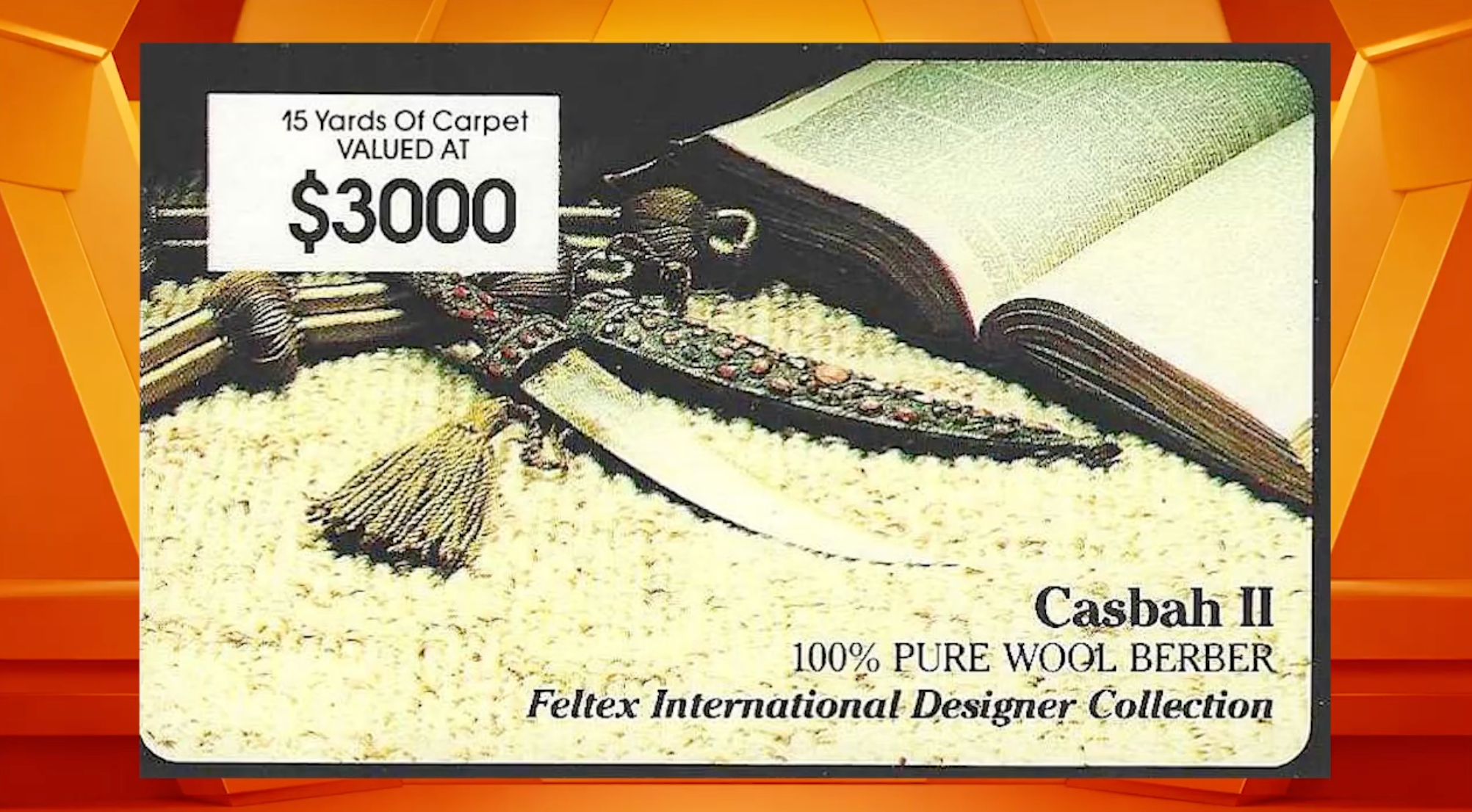
Our other gripe with this set is that prize cards were duplicated several times. Since these were photographs of real products — Canon cameras, real watercraft, etc. — perhaps there wasn't much money to license the names and images? In any case, I'd prefer having real pictures of real merchandise as opposed to watercolors and sketches of products like we've seen in other games such as High Rollers.
Explore Topics
Share this post
Written by
Chase
Content creator and writer sharing insights and stories.